The History of Glass Christmas Ornaments – How Poland Became the World Capital of Christmas Decorations
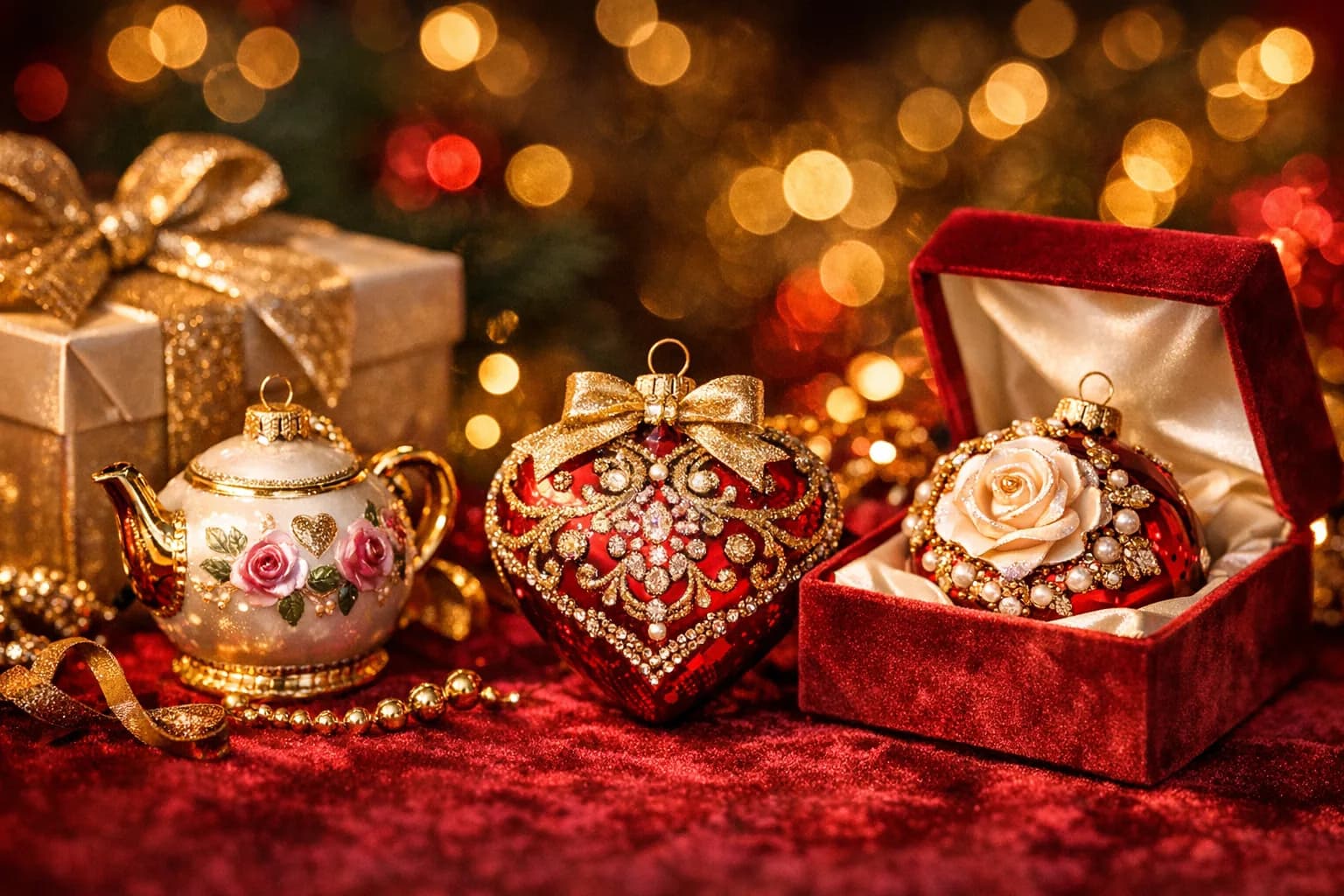
Glass Christmas ornaments carry a rich, centuries-old history deeply intertwined with Polish craftsmanship and tradition. Discover how Poland – and the Greater Poland region in particular – earned its reputation as the world capital of Christmas decorations. Step behind the scenes of workshops that have been creating the magic of Christmas for generations.

The History of Glass Christmas Ornaments – Where It All Began
The story of glass Christmas ornaments dates back to the 16th century, when glassblowers in the Thuringia and Lusatia regions of Germany began crafting the first decorative glass baubles for the Christmas tree. Early ornaments were solid and heavy, but over time they evolved into lightweight, blown-glass forms coated with silver foil or paint. The tradition of decorating an evergreen tree has Germanic roots, yet it was the glass bauble that gave the custom its enduring brilliance.
By the 19th century, the production of Christmas ornaments had flourished across Central Europe. Craft workshops multiplied, and delicate glass creations found their way onto trading tables from London to New York. Polish artisans played a pivotal role in this expansion, bringing their own artistic sensibility and exceptional attention to detail to the craft.
Poland as the Heart of Christmas Ornament Production
It is impossible to imagine the global Christmas decoration market today without Poland's contribution. In the regions of Greater Poland, Silesia and Lesser Poland, a unique culture of handcrafted glass bauble production has been shaped over many decades. Polish workshops became renowned for combining traditional glassblowing techniques with hand-painting, silvering and intricate ornamentation.
Gniezno – The Cradle of Polish Ornament-Making
One city holds a particularly special place on the map of Polish glassmaking heritage: Gniezno. It was here, in 1946, that the Bolglass manufactory was established – one of the oldest and most respected producers of glass Christmas ornaments in Poland. Founded in the aftermath of World War II, it became a symbol of the revival of Polish craftsmanship and has tirelessly preserved the tradition of handmade Christmas ornament production ever since.
Gniezno, the historic first capital of Poland, thus gained yet another source of pride – as a centre of artistic production whose ornaments grace homes across the globe. The craftspeople at Bolglass continue to work using methods passed down through generations, blending time-honoured expertise with a modern aesthetic sensibility.
How Is a Glass Christmas Bauble Made? Traditional Craft Techniques
Creating glass Christmas ornaments is a true art form, demanding years of practice and remarkable patience. The process of making each decoration can be broken down into several key stages:
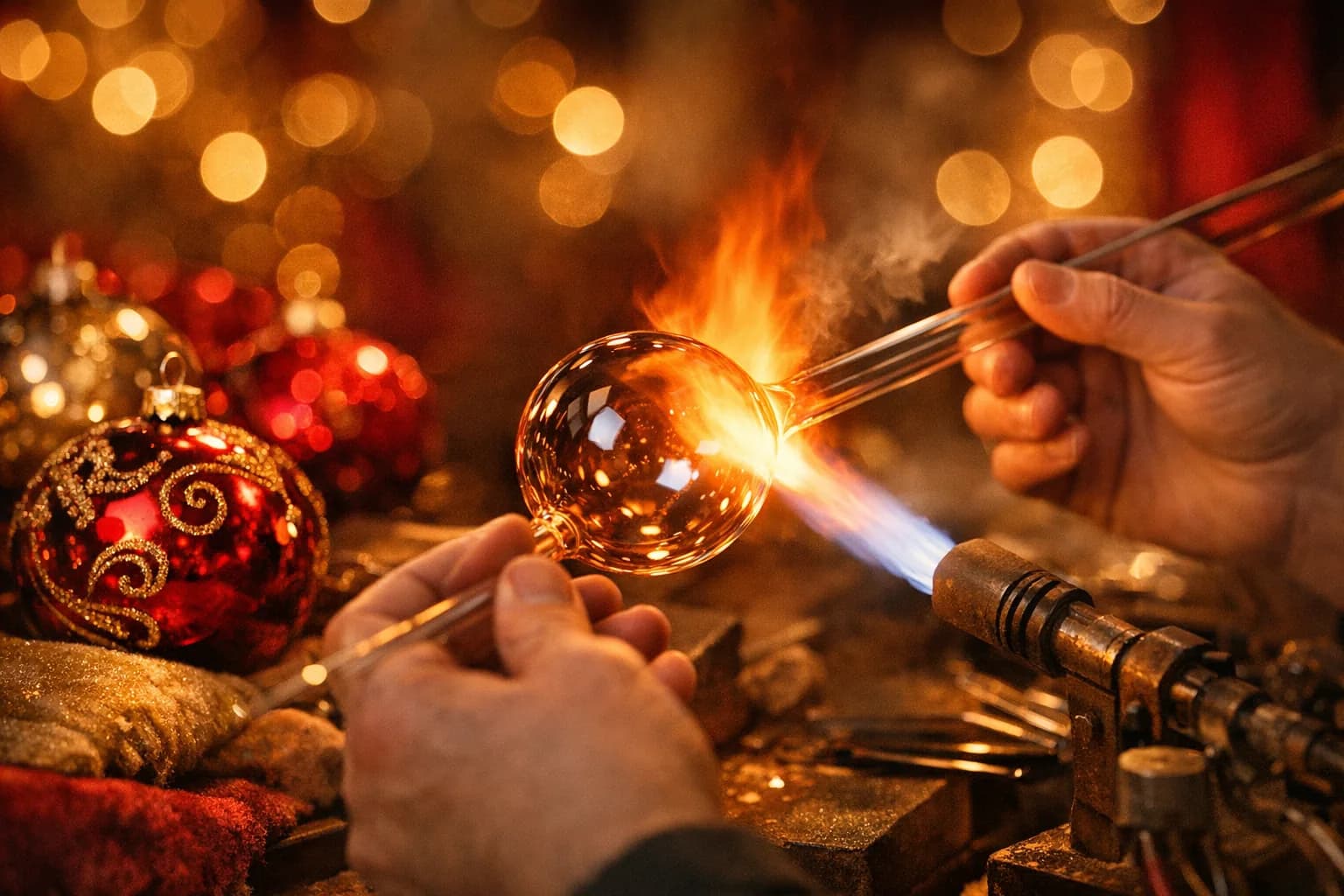
- Glassblowing – the artisan heats a glass rod or tube and shapes a sphere using breath or specially crafted moulds. This is the oldest and most demanding stage of production.
- Interior silvering – the inside of the bauble is coated with a silver nitrate solution, giving it its characteristic mirror-like sheen.
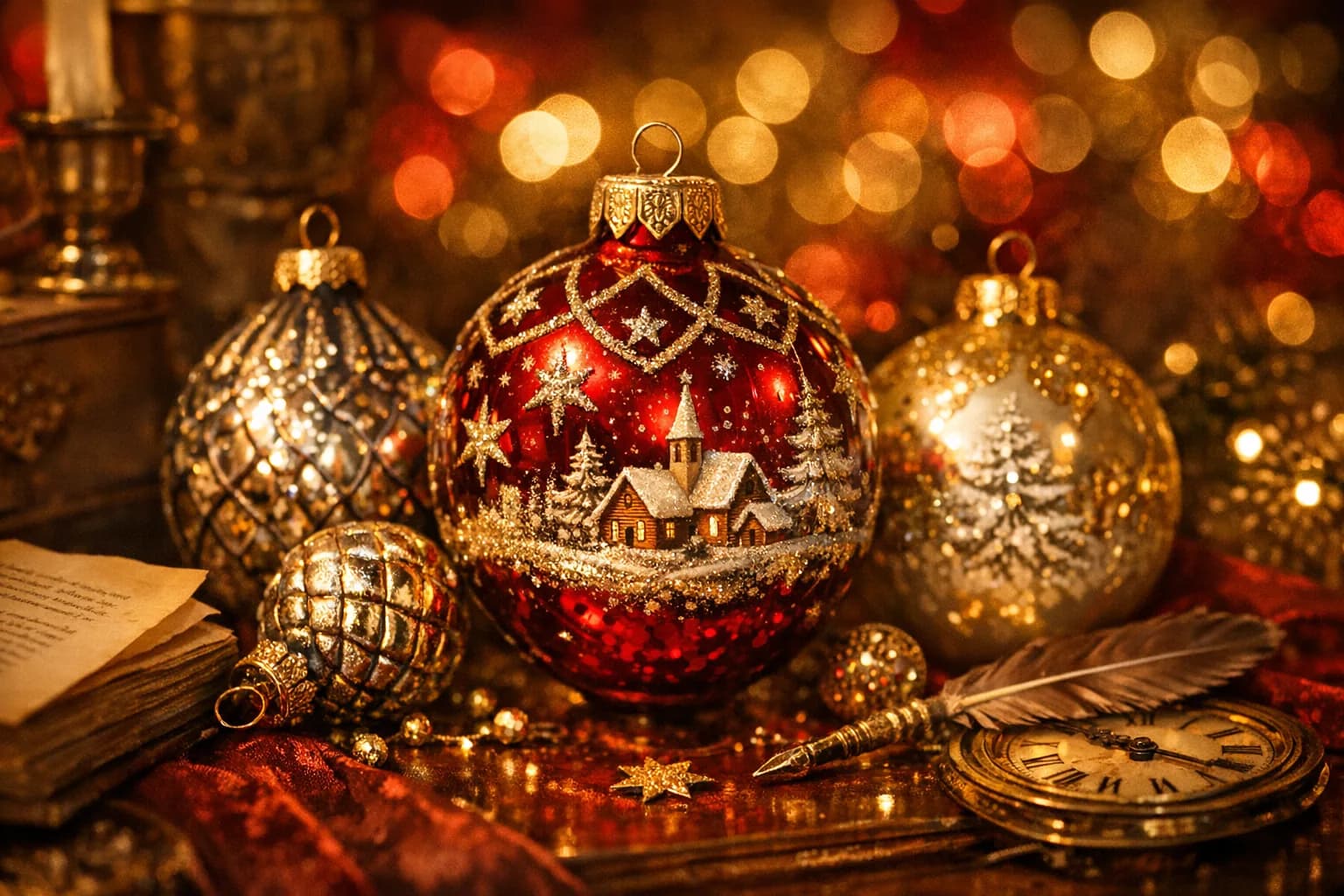
- Lacquering and painting – the outer surface is lacquered and then hand-painted by skilled artists using specialist paints and brushes. Every pattern is applied by hand.
- Decoration – glitter, glass granules, fabrics, lace and other decorative materials are applied to the surface, giving each bauble its individual character.
- Cap assembly – finally, a metal cap with a hanging loop is attached, allowing the ornament to be hung on the Christmas tree.
Every bauble produced in a Polish manufactory is one of a kind. Even when the same pattern is followed, the human hand introduces subtle variations that make each ornament a true original.
Polish Baubles on the World Stage – Export and Global Recognition
Polish glass Christmas ornaments are now sold in dozens of countries across the world – from the United States and Western Europe to Japan and Australia. They are prized for their outstanding craftsmanship, durability and original designs. Many foreign department stores and specialist Christmas retailers source their ornaments exclusively from Polish producers, recognising the artisanal care invested in every detail.
It is no coincidence that Poland is considered one of the most important centres of Christmas decoration production in the world. Polish workshops are estimated to account for a significant share of the global production of handmade glass baubles – and their reputation continues to grow.
Tradition Meets Modernity – How Polish Workshops Bridge Both Worlds
Contemporary Polish manufacturers, such as Bolglass of Gniezno, understand perfectly that the strength of their products lies in something intangible – the soul of craftsmanship embedded in every ornament. That is why, despite the passage of time and shifting trends, they continue to prioritise handwork and authentic techniques. At the same time, they embrace experimentation with form, colour and design, responding to the needs of customers around the world.
Bolglass ornaments adorn Christmas trees in private homes, hotels, restaurants and public spaces – wherever a truly special atmosphere and attention to detail matter most. This is proof that tradition and modernity can walk hand in hand, producing timeless creations that endure far beyond any single season.
Conclusion – Why Choose a Polish Glass Ornament?
The history of glass Christmas ornaments is a history of human creativity, craftsmanship and beauty passed from one generation to the next. Poland has played a uniquely important role in that story – becoming a place where tradition meets passion and every ornament becomes a small work of art. By choosing a Polish bauble – such as those crafted at Bolglass since 1946 – you are investing not merely in a beautiful decoration, but in a living piece of craft history.